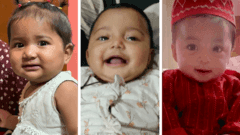
Bangladesh Measles Crisis: Over 120,000 Cases and Hundreds of Children Dead
A catastrophic measles outbreak has swept through Bangladesh, overwhelming hospitals and claiming hundreds of young lives after vaccination efforts collapsed.
Bangladesh's Measles Crisis: How a Nation Lost Its Hard-Won Progress
Not long ago, Bangladesh was celebrated as a public health success story. Measles vaccination rates had climbed above 90%, and the World Health Organisation was acknowledging the country's "substantial progress" toward eliminating the disease entirely. Today, that achievement lies in ruins.
Since mid-March, more than 120,000 suspected and confirmed measles cases have been recorded across the country. Nearly 750 people — the vast majority of them children — have lost their lives. And according to UNICEF, even those devastating figures likely understate the true scale of the crisis.
Inside the Overwhelmed Wards
In the city of Mymensingh, the measles ward at Medical College Hospital tells the story more clearly than any statistic could. The facility, designed to accommodate patients across 32 rooms, is currently housing close to 130 patients. Families without beds have spread blankets across hallways, their sick children lying beside them with nowhere else to go.
"I have never seen an outbreak this huge," says Dr Mohammed Golam Mawla, a paediatrician working amid the chaos.
Among the patients is a baby boy whose nostrils are too tiny to hold standard oxygen tubes in place. Doctors have resorted to bandaging and taping the tubes to his face just to keep him breathing. His father, Mohammad Alam Mia, has been at the hospital for two weeks watching his son struggle. "My baby isn't getting any better," he says quietly.
A Ten-Hour Journey, a Desperate Father
Another patient, a young boy named Arafat, was rushed to the hospital after a nearly ten-hour journey. His father collapsed and lost consciousness in the ambulance as his son became unresponsive during the trip. Doctors later diagnosed Arafat with pneumonia and heart failure — both life-threatening complications of measles. His father, Mohammad, has already exhausted his savings and turned to neighbors for financial help just to keep his son alive.
How Did It Come to This?
The question on every doctor's lips is the same one Dr Mawla poses aloud: "This disease was under control in our country. Why did this suddenly happen?"
Miguel Mateos Muñoz, UNICEF's spokesperson in Bangladesh, describes the outbreak as the result of a "perfect storm" — a convergence of multiple failures arriving at the worst possible time.
Vaccine Procurement Delays Under the Interim Government
Bangladesh has endured years of political instability. In 2024, mass student-led protests brought down the authoritarian government of former Prime Minister Sheikh Hasina. The interim administration that followed, led by Muhammad Yunus, is alleged by UNICEF to have delayed placing vaccine orders while it explored new suppliers and restructured its procurement financing.
Muñoz says UNICEF repeatedly warned the administration to act swiftly. "We were worried about possible vaccine gaps increasing, and it unfolding into what we're now seeing," he said.
The current government under Tarique Rahman claims it inherited a significant vaccine shortage upon taking office. The BBC reached out to Muhammad Yunus for comment, but he declined to be interviewed.
A senior health official from Yunus's administration, Syedur Rahman, pushes back against the narrative, insisting no shortage existed and that UNICEF's earlier communications "did not contain any specific warning about a potential measles outbreak." He added that experts, including representatives from other UN agencies, had suggested competitive procurement could lead to better cost efficiency over time.
Other Contributing Factors
Vaccine procurement issues alone do not fully explain the scale of this outbreak. UNICEF also points to:
- COVID-19 disruptions that interrupted routine childhood immunisation schedules
- No mass measles-rubella vaccination campaigns since 2020
- Severe overcrowding in communities and healthcare facilities
- Eid holiday travel that accelerated the spread of the highly contagious virus
Measles transmits through the air — a cough, a sneeze, or even simply breathing near an infected person is enough to pass it on.
Families Left Without Vaccines
Three hours from the capital Dhaka, a mother named Mosammat Nila Akhter describes bringing her ten-month-old daughter, Maliha, to a local clinic in February for her scheduled measles vaccine. She was told none were available.
Weeks later, as the outbreak surged, Maliha was hospitalised with pneumonia. After being discharged, her parents noticed a rash spreading across her stomach. Rushing back to the hospital, they were turned away due to a lack of beds and forced to wait three hours at a second facility before another child's discharge created space.
"No matter how much we wiped her body down, her fever didn't come down," Akhter recalls. "The doctors just kept saying, 'keep wiping her body.'" She also alleges that bed shortages resulted in measles patients and non-measles patients being placed in the same wards — a situation that could only accelerate the virus's spread.
A Warning to the World
Bangladesh is not facing this crisis in isolation. The United Kingdom, once declared free of measles, lost that elimination status this year following a notable rise in cases. The United States has similarly recorded increasing measles infections in recent years. In both countries, vaccination rates among children under five have fallen below the 95% threshold required to achieve herd immunity.
Public health experts are now pointing to Bangladesh as a stark warning: even brief interruptions in vaccine coverage can unravel decades of hard-won progress with terrifying speed. The measles virus does not wait for political transitions to resolve, procurement decisions to be finalized, or health systems to catch up.
For the families crowded into hallways in Mymensingh, that lesson has come at an unbearable price.