Anthropic Briefed Trump Administration on Secretive Mythos AI Model, Co-Founder Confirms
Anthropic co-founder Jack Clark confirmed the company shared details of its powerful, unreleased Mythos AI model with the Trump administration despite ongoing legal tensions.
Anthropic Opens Dialogue With Trump Administration Over Powerful Mythos AI Model
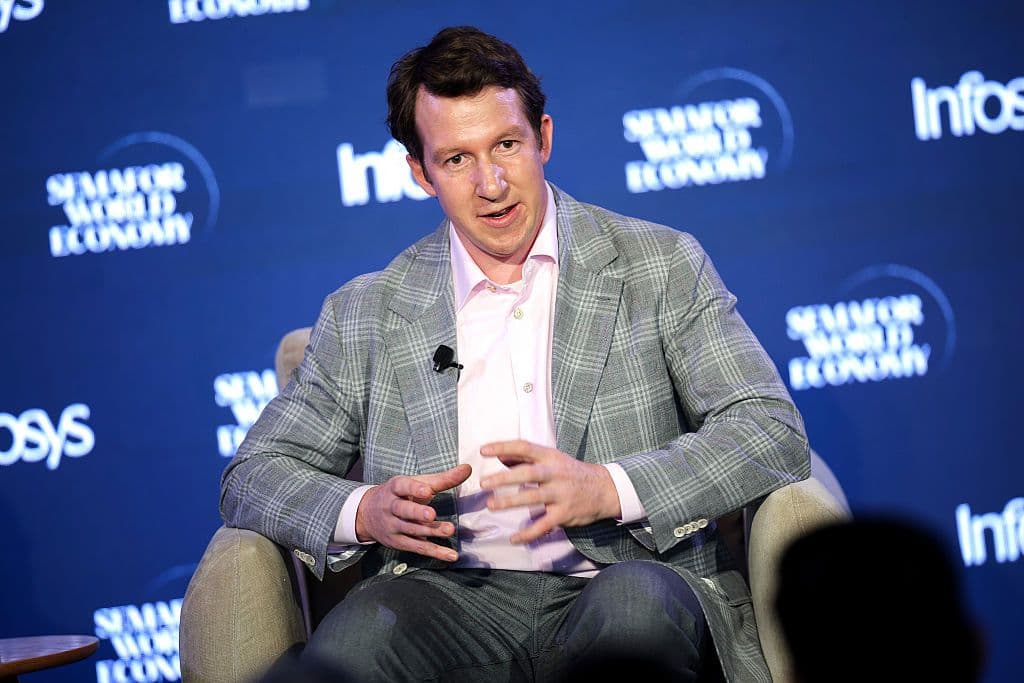
Anthopic co-founder and Head of Public Benefit Jack Clark has publicly confirmed that the company briefed members of the Trump administration on its newly unveiled Mythos AI model — a system so advanced and potentially dangerous that Anthropic has decided against releasing it to the general public.
The disclosure came during Clark's appearance at the Semafor World Economy Summit, where he addressed the seemingly contradictory nature of engaging with a government that Anthropic is currently suing.
A Lawsuit Overshadowed by National Security Priorities
Earlier this year, Anthropic filed a lawsuit against Trump's Department of Defense after the Pentagon classified the company as a supply-chain risk. The dispute stemmed from a fundamental disagreement over military access to Anthropic's AI systems — specifically, whether those systems could be deployed for mass surveillance of American citizens and fully autonomous weapons programs. Ultimately, OpenAI secured the contract that Anthropic had been competing for.
Despite the ongoing litigation, Clark was quick to reframe the conflict, describing it as a "narrow contracting dispute" that should not overshadow the company's broader commitment to national security. He made clear that Anthropic views government engagement not as optional, but as essential.
"Our position is the government has to know about this stuff, and we have to find new ways for the government to partner with a private sector that is making things that are truly revolutionizing the economy," Clark stated. "So absolutely, we talked to them about Mythos, and we'll talk to them about the next models as well."
Why Mythos Is Too Dangerous for Public Release
Announced just last week, the Mythos model has drawn significant attention due to its reportedly formidable cybersecurity capabilities. Those capabilities are precisely why Anthropic has opted to keep the model out of public hands for the time being. The company's decision to brief government officials before any broader deployment reflects a growing trend among AI developers of proactively engaging regulators and policymakers on high-risk technologies.
Adding another layer to the story, reports emerged last week that Trump administration officials were actively encouraging major financial institutions — including JPMorgan Chase, Goldman Sachs, Citigroup, Bank of America, and Morgan Stanley — to begin testing Mythos internally.
AI's Economic Impact: Jobs, Education, and the Future Workforce
Beyond the Mythos discussion, Clark used the Semafor summit as an opportunity to weigh in on some of the broader societal questions surrounding artificial intelligence.
Will AI Trigger a Jobs Crisis?
Anthopic CEO Dario Amodei has previously sounded the alarm on AI-driven unemployment, warning that job losses could reach levels reminiscent of the Great Depression. Clark, who oversees a team of economists at Anthropic, offered a more measured perspective. He explained that Amodei's stark projections are rooted in his belief that AI capabilities will advance far more rapidly than most people anticipate.
For now, Clark noted that Anthropic's economic research is only identifying "some potential weakness in early graduate employment" within certain sectors. He was careful to add, however, that the company is actively preparing contingency strategies should large-scale employment disruption materialize.
What Should Students Be Studying?
When pressed on which college majors will hold the most value in an AI-driven world, Clark steered clear of naming specific fields. Instead, he advocated for interdisciplinary, analytical thinking as the most future-proof educational foundation.
"What AI allows us to do is give you access to an arbitrary amount of subject matter experts across different domains," he explained. "But the really important thing is knowing the right questions to ask and having intuitions about what would be interesting if you collided different insights from many different disciplines."
His advice underscores a broader shift in how educators and industry leaders are rethinking the value of traditional degree programs in the age of artificial intelligence — favoring adaptability and critical thinking over domain-specific technical knowledge alone.