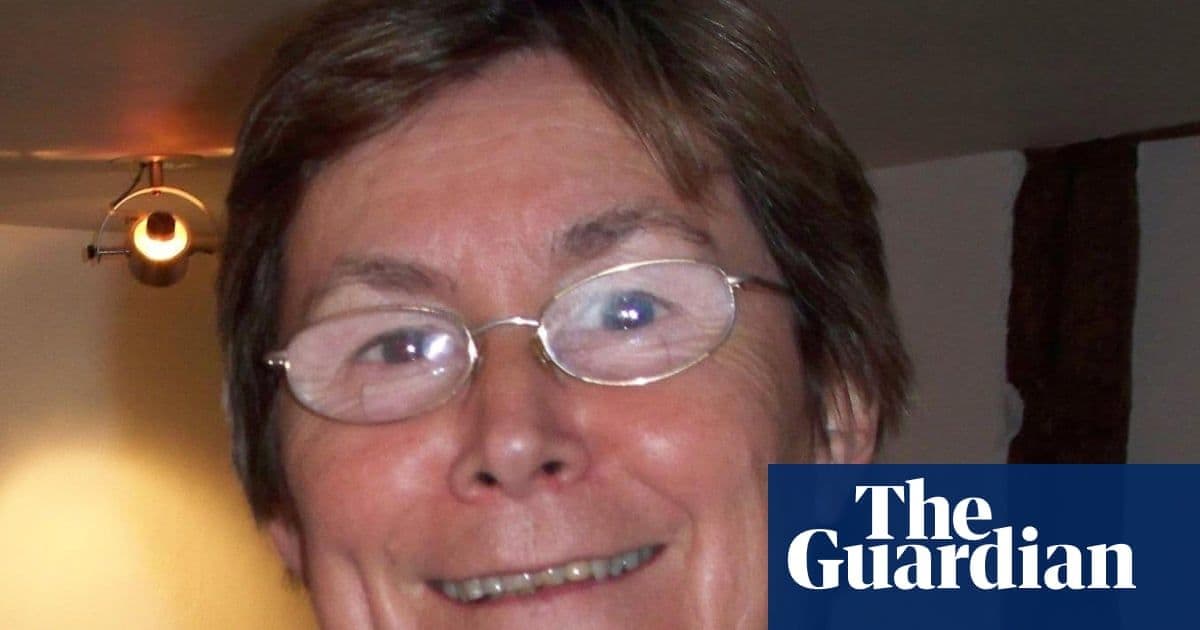
Ann Barrett: The Oncologist Who Transformed Cancer Care for Children and Shaped a Generation of Doctors
Ann Barrett, a pioneering oncologist and world authority on paediatric radiotherapy, dedicated four decades to improving cancer outcomes for children and advancing medical education.
A Career Built on Compassion and Scientific Excellence
When Ann Barrett earned her medical degree in 1968, oncology was a discipline on the move. New drugs were emerging, technology was advancing, and survival rates — long stubbornly low — were finally beginning to climb. For ambitious young doctors, it was an irresistible frontier. Barrett stepped into that world and never looked back.
Over a distinguished 40-year career, she became a globally recognised authority on paediatric radiotherapy, a tireless advocate for multidisciplinary care, and a formative influence on medical education across the United Kingdom. She died recently at the age of 83, leaving behind a legacy that continues to shape how cancer is treated and taught.
From St Bartholomew's to the Royal Marsden
Barrett completed her clinical training at St Bartholomew's Hospital in London, progressing through a series of junior doctor positions before joining the Royal Marsden Hospital in 1977 as a consultant. The Royal Marsden was — and remains — one of the world's foremost cancer research institutions, and Barrett found her niche there specialising in brain tumours in children and the irradiation of the central nervous system.
This was painstaking, high-stakes work. In cancers such as leukaemia, malignant cells can spread throughout the body, and those lodged in the nervous system are among the hardest to eradicate. Before the era of computers and advanced imaging, calculating the precise dose and exact location for radiation treatment required extraordinary care and close collaboration with medical physicists. The added complexity of treating children — whose organs were still developing — meant that every decision carried profound long-term consequences.
Barrett embraced this challenge with characteristic thoroughness. She worked closely with paediatric colleagues at the Royal Marsden and, recognising the need for a broader national effort, co-founded the UK Children's Cancer Study Group in 1977 — an organisation that later evolved into the Children and Young People's Cancer Association. Regular meetings in Birmingham brought together specialists to share data, compare outcomes, and push collective understanding forward.
Establishing Academic Foundations in Glasgow
By the early 1980s, radiotherapy remained an underrepresented academic discipline in many British medical schools. That began to change in 1980 when the University of Glasgow established a new department of radiation oncology. Barrett was invited to lead it in 1986, becoming its first professor.
Her impact was immediate and far-reaching. She designed and launched the UK's first MSc course in clinical oncology, crafting the syllabus from the ground up and personally tutoring students. She championed ideas that were still considered progressive at the time — holistic patient care, psychological wellbeing, and the power of multidisciplinary teamwork — embedding them into the curriculum and into clinical practice.
In 1988, Barrett played a central role in establishing the Beatson Oncology Centre, subsequently serving as its director. The largest cancer treatment centre in Scotland, the Beatson served a population of approximately 2.8 million people. Under Barrett's leadership, it became one of the first centres in the UK to hold multidisciplinary meetings, bringing together oncologists and surgeons to jointly determine the most appropriate treatment pathway for each individual patient. She also launched annual professional development gatherings in St Andrews each spring, giving junior doctors and allied health professionals a dedicated forum for learning about the latest advances in oncology.
A Commitment to Holistic Healing
Barrett's vision of cancer care extended well beyond clinical treatment. She was a founding director of the Maggie's Centre in Glasgow, serving in that role from 1997 to 2001; the centre opened its doors in 2002. She held a deep conviction that a patient's physical environment — including access to gardens and natural spaces — could play a meaningful therapeutic role in recovery and wellbeing.
A Principled Resignation and a New Beginning
Despite her achievements, Barrett grew increasingly frustrated with the deteriorating conditions at the Beatson centre during the late 1990s. Ageing equipment and a chronic shortage of resources meant that the centre, which should have operated eleven linear accelerators to adequately serve its population, had only six. Patients were regularly treated in corridors due to insufficient bed capacity.
In 2001, Barrett resigned — a courageous and very public act. In a statement to the British Medical Journal, she explained: "I am so unhappy that the quality of care I am able to give is so far below what I want that I simply find myself unable to carry on." Her departure, alongside that of several other senior consultants, triggered a government review and ultimately led to a significant upgrade of the facility.
Her next chapter unfolded in Norwich. The University of East Anglia had recently opened a brand-new medical school, and in 2002 Barrett joined as deputy dean and inaugural professor of oncology. Professor Sam Leinster, now professor emeritus at UEA, recalled her as "a prime mover" in shaping an innovative curriculum that placed students on hospital wards from their very first year. She also played a central role in developing a communications skills programme that ran throughout the full five years of undergraduate training. Barrett remained at UEA until her retirement in 2006.
An Influential Voice Beyond the Lecture Theatre
Barrett's influence was never confined to her immediate institution. She served as dean of the Royal College of Radiologists from 2002 to 2004 and provided expert guidance to bodies including the Ministry of Defence and NATO on the health effects of radiation exposure. In 2010, her sustained contribution to healthcare was formally recognised with the award of an OBE.
As a scholar and communicator, Barrett was extraordinarily prolific. She authored or co-authored more than 150 academic papers and made significant contributions to landmark textbooks still widely consulted today. These include Practical Radiotherapy Planning — first published in 1985 and now in its fifth edition — and Cancer in Children: Clinical Management, which first appeared in 1975 and has since been expanded into the Oxford Textbook of Cancer in Children, now in its seventh edition. In 1976, she translated the paediatric oncologist Odile Schweisguth's French-language textbook into English, and in 1994 she took a media fellowship with the British Science Association, spending time at the science desk of the Independent newspaper.
The Woman Behind the Achievements
Ann Barrett was born in Southgate, north London. Her father, Robert Brown, had left the Welsh mining valleys to pursue a career in journalism; her mother, Elsie, was a primary school teacher. Both parents held firm socialist convictions. Ann was the eldest of three children, with a brother, David, and a sister, Jenny.
She attended Queen Elizabeth Girls' School in Barnet, where she studied languages at A-level. Her decision to pursue medicine presented an early obstacle — she had no science A-levels — but St Bartholomew's Hospital agreed to accept her on the condition that she completed a preliminary pre-medical year to build her knowledge of biology. It was a challenge she met without difficulty.
Barrett married haematologist John Barrett in 1970; the couple divorced twelve years later. In 1989 she married Adrian Bell, a Glasgow prison officer whom she had first encountered when she treated his wife for cancer. That marriage also ended in divorce, but Barrett maintained a close and affectionate relationship with her three stepchildren throughout her life.
In retirement, Barrett settled in Cambridge, where she served as church warden at St Paul's Church, supported the local food bank, and worked to engage with marginalised members of the community. She found joy in nature, poetry, piano playing, cycling, and attending music and arts festivals.
She is survived by her brother David, her sister Jenny, and her three stepchildren.
A Legacy That Endures
Ann Barrett's career traced the arc of modern oncology — from the tentative early advances of the late 1960s to the sophisticated, patient-centred care of the twenty-first century. She was not merely a witness to that transformation; she was one of its architects. Her insistence on collaboration, her investment in education, and her refusal to accept second-best for her patients defined a career of rare distinction and lasting consequence.