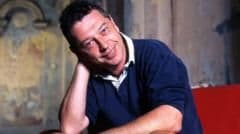
Andy Kershaw, Legendary Radio 1 DJ and Live Aid Presenter, Dies at 66
Pioneering BBC broadcaster Andy Kershaw, celebrated for championing world music and covering global conflicts, has passed away at the age of 66.

Andy Kershaw, Pioneering BBC Broadcaster, Passes Away at 66
Andy Kershaw, one of Britain's most distinctive and adventurous radio broadcasters, has died at the age of 66. His family confirmed the news on Thursday evening, marking the end of a remarkable career that spanned decades and crossed continents.
Earlier this year, in January, it had been revealed that Kershaw had received a cancer diagnosis and that the illness had left him unable to walk. Despite the gravity of his condition, those who knew him said he faced it with characteristic wit and resilience.
A Career Built on Eclectic Passion
Born in Rochdale in 1959, Kershaw grew up to become one of the most unconventional voices in British broadcasting. After completing his studies at Leeds University, he took his first steps in the industry during the early 1980s at Radio Aire in Leeds, where he worked as a promotions manager alongside veteran broadcaster Martin Kelner.
His big break came in 1984 when he was invited to anchor The Old Grey Whistle Test, the BBC's prestigious rock music television programme. He had caught the attention of producers while working as a roadie and driver for singer-songwriter Billy Bragg — a fitting origin story for someone who would go on to dedicate his career to discovering and promoting music from the margins.
Live Aid and the Rise to National Prominence
In the summer of 1985, Kershaw became one of the BBC's on-screen presenters for Live Aid, the landmark charity concert organised by Bob Geldof and Midge Ure to raise funds for victims of the Ethiopian famine. The event drew global audiences and cemented Kershaw's profile as a broadcaster of national significance.
That same year, he joined BBC Radio 1, where he would remain a fixture for 15 years. His late-night programme became a platform for world music, independent artists, and sounds that mainstream radio rarely touched. Some within the industry even regarded him as a potential heir to the legendary John Peel. His sister, Liz Kershaw, also joined Radio 1 during this period, working at the station between 1987 and 1992.
A Voice for the World's Stories
When his Radio 1 show was axed in 2000 as part of a wider scheduling restructure — its final broadcasts featuring sessions from Willie Nelson and Lou Reed — Kershaw transitioned into a new phase of his career. He became a correspondent for BBC Radio 4, contributing to flagship programmes such as Today, and reported from some of the world's most turbulent regions, including coverage of the 1994 Rwandan Genocide and the civil war in Sierra Leone in 2001.
His work also extended to BBC Radio 3, where he continued to blur musical boundaries, famously embarking on a cultural and musical tour taking in Iraq, Iran, and North Korea. In his own words, he simply continued to "ignore categories and mix it all up."
The Philosophy Behind the Broadcast
Kershaw often credited producer John Walters as a formative influence on his broadcasting outlook. He summarised their shared philosophy with a memorable quote: "We're not here to give the public what it wants. We're here to give the public what it didn't know it wanted." That ethos defined his entire career.
Personal Struggles and a Triumphant Return
Kershaw's professional journey was not without significant personal difficulties. A series of well-documented private struggles led to a prolonged absence from broadcasting. In 2008, he was sentenced to three months in prison for breaching a restraining order preventing contact with his former partner, and later received a suspended six-month sentence for a subsequent violation.
However, by 2011 he had made a determined return to the airwaves. Collaborating with co-presenter Lucy Duran on Music Planet for BBC Radio 3, the pair travelled to remote and isolated communities around the globe to record extraordinary musical traditions. The series was tied to BBC One's acclaimed Human Planet documentary. That same year, Kershaw published his autobiography, No Off Switch, offering a candid account of his life, career, and the adventures that defined both.
Facing His Final Chapter with Humour
In the years that followed, Kershaw continued to broadcast through his own podcast, maintaining his connection with listeners who had followed him for decades. When news of his cancer diagnosis broke earlier this year, his response was quintessentially Kershaw — unflinching and darkly funny.
Describing himself as being in "good spirits," he quipped: "I am determined not to die before Benjamin Netanyahu, Vladimir Putin, Donald Trump and Ant and Dec. That should keep me going for a while."
Andy Kershaw leaves behind a legacy as one of British broadcasting's most courageous and original voices — a man who used his platform not to reflect popular taste, but to expand it.