America's Drug Overdose Deaths Are Falling Fast — But a Toxic New Street Drug Crisis Looms
Overdose deaths in the U.S. have dropped to historic lows, but experts warn a dangerous wave of synthetic street drugs could reverse that progress.

America Is Winning the Overdose Battle — But a New Threat Is Emerging
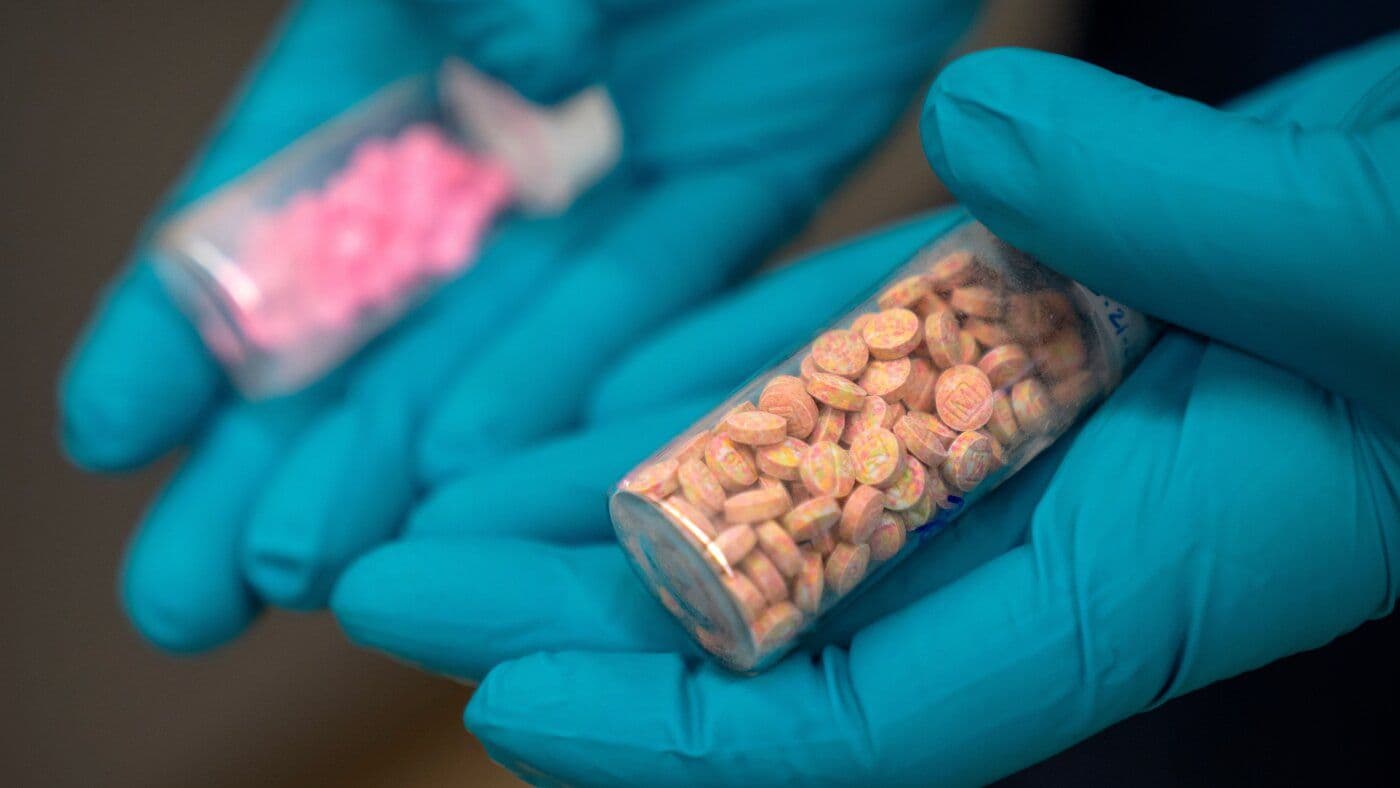
For the first time in recent memory, the United States is experiencing a dramatic and sustained decline in drug overdose deaths. Public health researchers are calling it historic. Yet beneath this encouraging trend lies a deeply troubling development: the street drug supply is transforming into what chemists describe as a "synthetic soup" — an ever-changing and potentially lethal mixture of industrial chemicals that is leaving users, doctors, and law enforcement struggling to keep pace.
A Baffling Case in South Carolina
Earlier this year, Richland County Coroner Naida Rutherford found herself investigating a death that defied easy explanation. The scene bore all the familiar signs of a fentanyl overdose — foam around the mouth and nose, classic physical markers — yet the victim's blood tested completely clean for any known substance.
"Every sort of physical manifestation, like the foam coming from the mouth and nose, as if they had an overdose," Rutherford explained. "Their blood tested negative for any substance, which was very odd."
Her team broadened their testing parameters and eventually identified the culprit: cychlorphine, an extraordinarily potent synthetic opioid that has been spreading rapidly through the U.S. street drug supply.
"This is the first time we've seen it in South Carolina, which is very scary because none of us knew to test for it," she told NPR.
The Street Drug Supply Is Changing at an Alarming Rate
For decades, the illegal drug trade was largely built around plant-derived substances like heroin and cocaine. That model has changed significantly. Criminal networks and drug cartels have increasingly pivoted to manufacturing synthetic compounds using industrial chemicals — substances that are cheaper to produce, easier to traffic, and far more difficult to detect.
Fentanyl and methamphetamine have dominated headlines for years, but illicit chemists are now blending street drugs with a constantly rotating roster of unknown compounds. The mix has included everything from Novocaine to BTPMS, an industrial chemical typically used as a stabilizer in plastics manufacturing.
"Why those in particular are being put into the drug supply is a bit of a medical mystery at this point," said Nabarun Dasgupta, a researcher at the University of North Carolina who monitors street drug trends and overdose patterns.
Ed Sisco, a research chemist at the National Institute of Standards and Technology — a federal agency that tracks and tests street drug samples — described the pace of change as relentless.
"Once a month or every other month, we're encountering something that we've never seen before, and we don't have indications of it being seen in the United States before," Sisco said.
A Growing List of Dangerous New Compounds
The catalog of novel substances turning up in the street drug supply is both extensive and alarming. Among the most concerning:
- Medetomidine — a powerful sedative capable of causing serious cardiac damage, with withdrawal symptoms so severe they can be life-threatening.
- Xylazine ("tranq") — a veterinary sedative linked to severe, disfiguring skin lesions.
- Cychlorphine and nitazenes — synthetic opioids reported to be even more potent than fentanyl.
- Illicit benzodiazepines — a class of sedatives that triggered mass hospitalizations in Baltimore last summer, though fortunately all patients survived.
According to Dasgupta, medetomidine presents a particularly complex medical challenge. "The problem with medetomidine is that the withdrawal from it is life-threatening if you quit cold-turkey. That is not the case with fentanyl or xylazine."
The Centers for Disease Control and Prevention has issued a formal health alert warning about the spread of medetomidine, while attorneys general in South Carolina and other states have raised alarms specifically about cychlorphine.
Why These Drugs Are So Difficult to Treat
Beyond their raw potency, many of these new compounds pose a unique challenge in emergency medical settings: they do not respond to standard overdose reversal treatments like Narcan (naloxone). This resistance means that even when first responders arrive quickly, their most reliable tools may prove ineffective — and patients may require prolonged, expensive hospital care.
"Substances that are in the supply are constantly changing, and the other thing we see is the amount and potency of the substances is constantly changing," Sisco said. That unpredictability makes it effectively impossible for even seasoned drug users to gauge what they are consuming or protect themselves from a fatal dose.
Historic Progress: Overdose Deaths Are Plummeting
Despite these mounting dangers, the overall trajectory of drug overdose deaths in the U.S. is moving in the right direction — and by a remarkable margin.
Preliminary CDC data through October 2025 shows approximately 71,542 overdose deaths recorded over a 12-month period. That represents a staggering drop from the peak of nearly 113,000 deaths logged in the 12 months ending August 2023.
"This is unprecedented and historic, for the longest consecutive months of decline," said Lori Ann Post, a researcher at Northwestern University whose recent paper in the American Journal of Public Health documents the sustained improvement. "That is awesome."
Researchers attribute the decline to a combination of factors, including a reduction in the potency of illicit fentanyl circulating on the streets, expanded access to addiction treatment, and the wider availability of overdose reversal medications.
Opioid Deaths Drop So Fast, Stimulants Now Lead Overdose Fatalities
One of the more striking statistical shifts is that opioid-related deaths have fallen so sharply that overdoses from stimulants — cocaine and methamphetamine — now claim more lives than opioids do. That represents a fundamental change in the overdose landscape that few researchers predicted just a few years ago.
"Opioids went way down. We have better interventions to treat opioid use disorder, we have reversal agents like Narcan to undo an overdose," Post explained.
Zero Is a Meaningful Number
Perhaps one of the most striking data points in the current recovery comes from Maine. According to Dasgupta, not a single person under the age of 25 in that state has died from a drug overdose in nearly 12 months.
"It's remarkable that no one in Maine under age 25 has died in nearly 12 months. Zero is a meaningful number," he said.
Why Are Drug Dealers Making Their Own Products Deadlier?
One puzzling question researchers continue to investigate is why drug traffickers would intentionally introduce chemicals into their products that make users sick rather than delivering the euphoric effect buyers seek. A drug supply that harms or kills its customers would seem to be bad for business.
Dasgupta believes the answer may be rooted in supply chain economics. Criminal organizations mixing synthetic drugs are increasingly relying on whatever industrial chemicals are available and affordable, even when those chemicals produce unpleasant or dangerous effects.
Countering intuitively, he suggests this development may actually be contributing to the decline in overdose deaths, as more people choose to step away from drug use entirely when the risks become too unpredictable and the experience too unpleasant.
The Road Ahead: Progress With Caution
Every researcher and public health expert consulted on this issue agrees: the progress made so far is real, significant, and worth celebrating. But it is far from secure.
The street drug supply is changing faster than surveillance systems can track it, faster than labs can test for new compounds, and faster than emergency medicine can develop effective countermeasures. Each new chemical introduced into circulation represents a potential new crisis waiting to unfold.
The situation demands continued investment in drug monitoring infrastructure, expanded treatment access, and public health outreach — because while the numbers are moving in the right direction, the chemical landscape underneath them has never been more volatile.

