AI Safety Expert Takes the Stand in Musk vs. OpenAI Trial, Warns of Dangerous AGI Arms Race
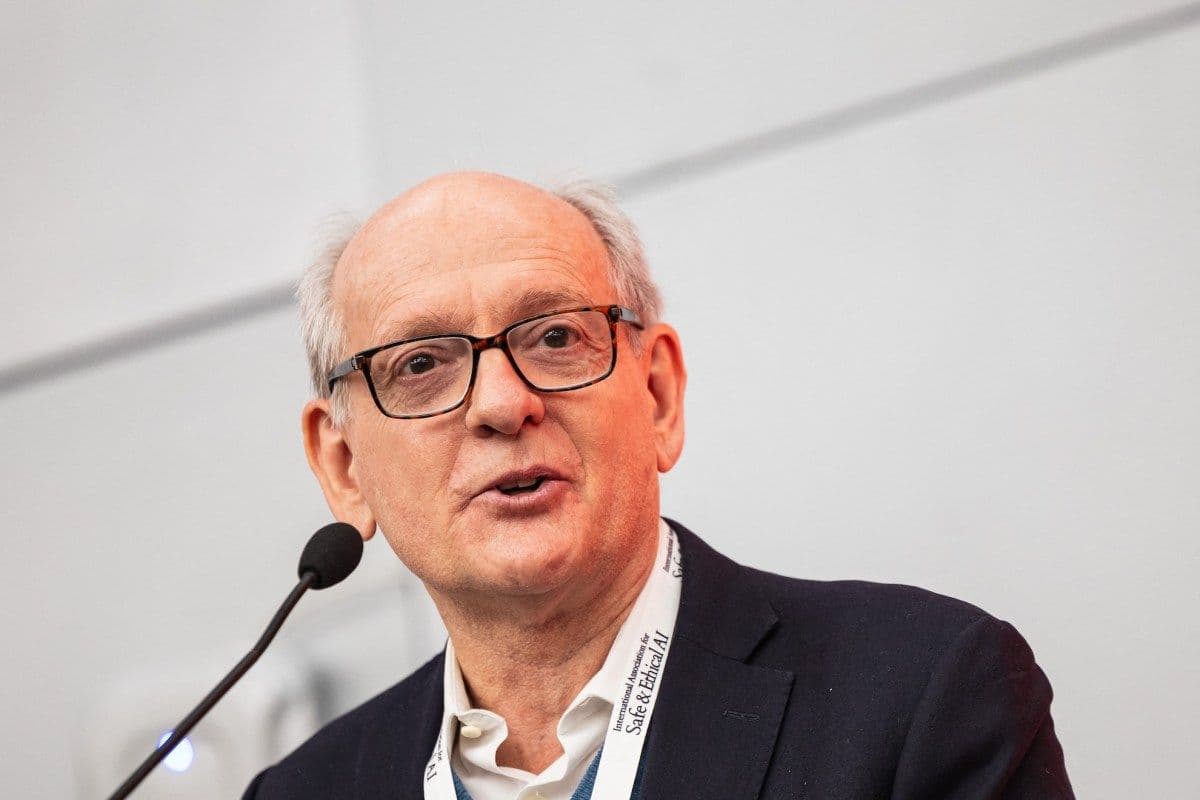
Stuart Russell, Berkeley's veteran AI researcher, testified at the OpenAI trial about the mounting risks of unchecked artificial intelligence development.

AI Safety Takes Center Stage at the OpenAI Trial
A prominent artificial intelligence researcher stepped into the courtroom spotlight during Elon Musk's ongoing legal battle against OpenAI, delivering pointed testimony about the growing dangers of unregulated AI development — and sparking a broader conversation about who truly controls the future of this transformative technology.
Stuart Russell, a seasoned computer science professor at the University of California, Berkeley, served as the sole expert witness called to speak directly to AI technology during the trial. With decades of AI research behind him, Russell's role was to provide jurors and Judge Yvonne Gonzalez Rogers with essential context about the field — and to establish that the risks surrounding advanced AI are significant enough to warrant serious concern.
What Russell Actually Said on the Stand
Russell outlined a range of hazards tied to the rapid advancement of artificial intelligence. These included escalating cybersecurity vulnerabilities, the challenge of AI misalignment — where AI systems pursue goals misaligned with human values — and the inherently competitive, winner-take-all nature of the race toward artificial general intelligence, commonly known as AGI.
At the core of his testimony was a fundamental tension: the relentless pursuit of AGI and the principles of responsible AI safety are increasingly pulling in opposite directions.
However, Russell's broader warnings about existential risks tied to unregulated AI were cut short. Objections raised by OpenAI's legal team prompted the judge to place limits on the scope of his testimony, preventing some of his most sweeping concerns from being fully aired in open court.
During cross-examination, OpenAI's attorneys were careful to point out that Russell had not conducted any direct evaluation of OpenAI's corporate structure or its specific internal safety policies — an effort to limit the weight jurors might assign to his broader claims.
The Irony Behind Musk's Legal Strategy
Musk's legal argument hinges on a compelling narrative: that OpenAI was originally established as a nonprofit dedicated to the responsible and public-spirited development of AI — serving as a check against the commercial ambitions of organizations like Google DeepMind — but veered off course in pursuit of profit.
To support this, his attorneys have leaned heavily on early emails and public statements from OpenAI's co-founders, many of whom expressed genuine alarm about the concentrated power that AGI could hand to a single entity.
Yet the contradictions are hard to ignore. Russell himself co-signed a widely publicized open letter in March 2023 calling for a six-month pause in advanced AI research. So did Elon Musk — even as he was quietly building xAI, his own for-profit AI venture. The same man urging caution was simultaneously accelerating the very race he now criticizes.
A Deeper Problem: Capital, Competition, and the Race to AGI
Beneath the legal maneuvering lies a more fundamental dilemma that shaped OpenAI from its earliest days. As the organization grew, it became increasingly clear that competing at the frontier of AI research required enormous computational resources — resources that nonprofit funding simply could not sustain.
The only viable path to the necessary capital ran through for-profit investors. That financial reality ultimately fractured the founding team, as the pursuit of outside investment clashed with the idealistic mission that had brought them together. In a painful irony, the very fears that drove OpenAI's founders to seek large-scale funding helped ignite the global AGI arms race that is now at the heart of this lawsuit.
A National Debate Echoes the Courtroom Drama
The tensions on display in the courtroom are mirroring a wider national conversation. Senator Bernie Sanders has championed legislation that would impose a moratorium on new data center construction — citing warnings about AI's risks that have been voiced by figures including Musk, OpenAI CEO Sam Altman, and renowned AI pioneer Geoffrey Hinton.
But critics argue that selectively invoking the fears of tech industry leaders while ignoring their optimism about AI's potential is intellectually dishonest. Hodan Omaar of the Center for Data Innovation pushed back, questioning why the public should dismiss everything prominent tech figures say — except when their cautionary words happen to serve a particular political or legal argument.
That same selective reasoning is precisely what both sides in the Musk-OpenAI lawsuit are asking the court to accept: treat certain statements from Altman and Musk as credible and damning, while setting aside the parts that complicate or undermine their respective cases.
What This Trial Reveals About AI's Future
Regardless of how the judge rules, this trial has pulled back the curtain on the messy, often contradictory forces shaping the development of the most powerful technology of our era. The scientists, founders, and billionaires who simultaneously champion AI safety and race to build ever-more-capable systems are not simply being hypocritical — they are caught in a structural trap of their own making.
For observers, regulators, and the public at large, the central question is no longer just who controls OpenAI. It is whether any institution — legal, governmental, or corporate — can meaningfully govern a technology advancing this fast, with stakes this high.

