Agricultural Pollution Crisis Demands Urgent Regulatory Overhaul, Watchdog Warns
The UK's environment watchdog says existing farming regulations are falling short, calling for sweeping changes to tackle worsening water pollution across Northern Ireland.
Farming Regulations Failing to Protect Water Quality, Watchdog Finds
The United Kingdom's official environment watchdog has issued a stark warning: current regulations designed to curb pollution from agricultural sources are simply not working well enough, and meaningful reform cannot wait any longer.
The Office for Environmental Protection (OEP) conducted a thorough assessment of the 2019 Nutrients Action Programme (NAP), the primary regulatory framework governing nutrient pollution from farming activities in Northern Ireland. While the review acknowledged that "considerable progress" had been achieved since the programme's inception, it concluded that the framework must be "significantly strengthened and better implemented" if it is to achieve its intended environmental goals.
A Crisis Deepening in Northern Ireland's Waterways
The OEP's Chief Scientist, Professor Robbie McDonald, was unambiguous in his message: delays to meaningful reform will only deepen what he described as a "widening crisis" affecting the region's lakes, rivers, and coastal waters. Nutrient pollution has already been designated a top environmental priority for Northern Ireland by the watchdog, which is separately probing wastewater pollution in Belfast Lough.
The latest review identified critical gaps in existing legislation and areas of legal uncertainty that are actively undermining the effectiveness of pollution controls. Most significantly, the OEP concluded that the current NAP framework, in its present form, is incapable of delivering the strategic environmental improvements required across water, air, and land quality.
The Agri-Food Industry's Role
Professor McDonald was direct about where responsibility lies. He pointed to robust evidence confirming that the agri-food sector is a "significant contributor" to nutrient pollution — and argued it must therefore be equally significant in its efforts to reduce it.
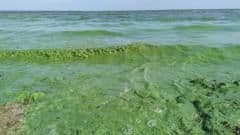
A central concern highlighted in the review is the agri-food industry's growing dependence on vast quantities of imported animal feed and synthetic fertilisers. These inputs routinely supply more nutrients than crops and livestock can absorb, resulting in agricultural run-off that flows into waterways. The consequences are severe: damage to sensitive natural habitats and the proliferation of toxic blue-green algal blooms, most visibly in Lough Neagh.
Twelve Recommendations to Strengthen the Framework
The OEP put forward 12 specific recommendations aimed at reinforcing the NAP regulations. These span three key areas:
- Compliance and enforcement — increasing farm inspections and ensuring sanctions remain proportionate to the severity of each pollution incident
- Technical provisions — refining the specific rules governing how nutrients are managed on farms
- Future-proofing — adapting regulations to account for the escalating pressures of climate change
The report noted that financial penalties for pollution incidents may currently lack sufficient deterrent force, though it stressed that both civil and criminal enforcement tools should remain available to regulators depending on the circumstances of each case.
A Generational Responsibility
Professor McDonald framed the issue not just as an environmental challenge but as an intergenerational obligation. "Failing to invest in what needs to be done today is just borrowing from the next generation," he warned, adding that government, the agri-food industry, and its wider business community must all play an active role in ensuring a fair and just transition for the farming community.
Government Response and the Road Ahead
Agriculture Minister Andrew Muir acknowledged that improving water quality remains a top priority, while emphasising the importance of a collaborative approach. He highlighted the NAP's central role within the broader package of measures required to achieve meaningful environmental progress.
Minister Muir confirmed that a further public consultation on revised NAP proposals is expected to be launched in the coming weeks, following the anticipated publication of a reviewed report from a dedicated task-and-finish group.
Timeline of the Nutrients Action Programme
- 2007 — The Nutrients Action Programme was first launched to address agricultural water pollution
- 2019 — The current NAP regulations came into force
- 2024 — A revised NAP was originally due to take effect
- 2025 — A proposed framework for 2026–29 was released for public consultation; a task-and-finish group was subsequently established to review submissions, including input from agri-food industry representatives
- 2026 — Revised proposals are expected to be published following further consultation and Executive approval
The OEP's findings make clear that while farmers have made genuine efforts since the programme began nearly two decades ago, incremental progress is no longer sufficient. The scale of environmental damage — and the pace at which it is accelerating — demands transformative action, not cautious adjustment.

