Against All Odds: How NASA Is Keeping Voyager 1 Alive at the Edge of the Stars
Launched in 1977, Voyager 1 is the farthest human-made object ever built — and NASA is fighting to keep it running just a little longer.
The Spacecraft That Refused to Quit
More than four decades ago, a probe no larger than a compact car was launched into the sky from the Florida coast, strapped to the top of a rocket and pointed at the outer solar system. Its designers gave it five years. It has now been traveling for nearly fifty.
This week, NASA confirmed it has powered down one of Voyager 1's last remaining scientific instruments — not as an admission of defeat, but as a calculated act of survival. The goal is simple: keep the most distant spacecraft in human history alive for as long as physically possible.
What Voyager 1 Actually Is
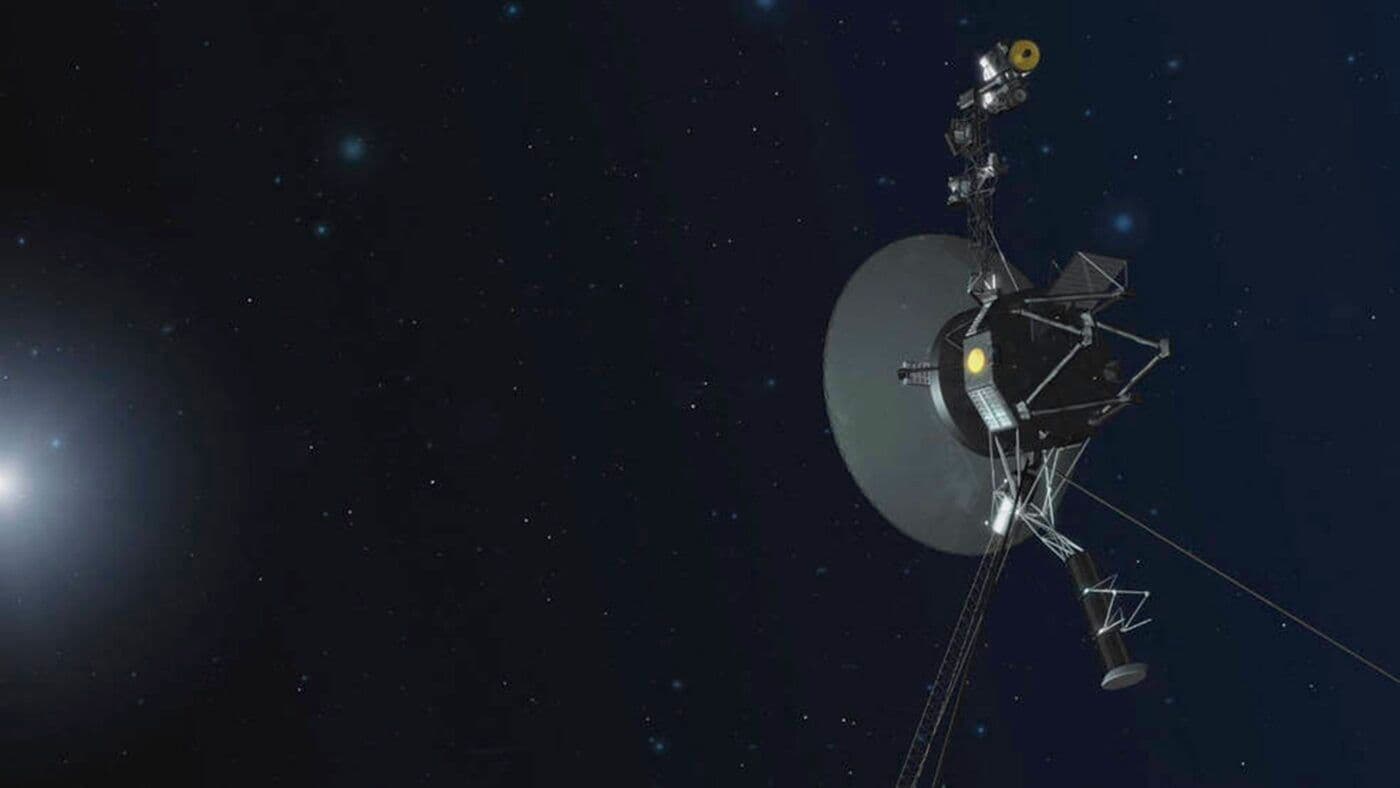
Voyager 1 is a robotic deep-space probe that lifted off on September 5, 1977, from Cape Canaveral, Florida, riding a Titan-Centaur rocket into history. Weighing approximately 1,797 pounds — comparable to a mid-size sedan — the spacecraft is equipped with a 12-foot dish antenna that keeps it locked in communication with Earth. It was designed and built at NASA's Jet Propulsion Laboratory (JPL) in Southern California, a research facility operated by the California Institute of Technology.
For nearly 49 uninterrupted years, Voyager 1 has been sending data back across the void of space, making it one of the most enduring feats of engineering humanity has ever achieved.
The Rare Alignment That Made It Possible
The entire Voyager program was born from a stroke of cosmic timing. In the late 1960s, scientists and engineers recognized that Jupiter, Saturn, Uranus, and Neptune were slowly drifting into a rare planetary alignment — one that would not repeat for approximately 175 years. This alignment created an extraordinary opportunity: a spacecraft could use each planet's gravitational field as a natural slingshot, gaining velocity and changing direction without burning additional fuel. This technique is known as a gravity assist.
NASA initially envisioned a sweeping mission called the "Grand Tour" that would visit all four outer planets. Budget limitations eventually pared that vision down, and the rechristened Voyager program was formally approved for a focused fly-by of Jupiter and Saturn only. The twin probes were designed to last five years. They have lasted nearly ten times longer.
A Journey of Extraordinary Discoveries
Voyager 1's scientific legacy is almost incomprehensible in scope. When the probe swept past Jupiter in March 1979, it captured something nobody had ever seen before: active volcanoes erupting on Io, one of Jupiter's moons. It was the first confirmed discovery of volcanic activity anywhere beyond Earth.
The spacecraft then arced toward Saturn, arriving in November 1980 and delivering breathtaking close-up imagery of the planet's iconic ring system and its largest moon, Titan. The trajectory required for that Titan flyby tilted Voyager 1 upward, out of the flat plane of the solar system entirely — effectively ending its tour of the planets but launching it on a one-way journey toward interstellar space.
In 1990, NASA formalized the spacecraft's new purpose under the Voyager Interstellar Mission, directing the probe to seek out the very boundary of the Sun's influence. That moment came on August 25, 2012, when Voyager 1 crossed the heliopause — the point at which the Sun's stream of charged particles finally gives way to the matter and energy of interstellar space. It became the first human-made object in history to exit our solar system. Its twin, Voyager 2, crossed the same threshold in 2018.
15 Billion Miles and Counting
As of spring 2026, Voyager 1 sits more than 15 billion miles from Earth. At that staggering distance, a radio signal traveling at the speed of light takes over 23 hours to reach the spacecraft — one way. Every instruction engineers transmit, and every data packet the probe returns, must cross that unfathomable gulf.
The spacecraft draws its power not from solar panels or conventional batteries, but from a radioisotope thermoelectric generator — a device that converts heat produced by decaying plutonium into electricity. That nuclear heat source loses roughly 4 watts of output every year. After nearly five decades of decay, the power budget has become critically tight.
Why NASA Pulled the Plug on One More Instrument
In late February, during a routine operational maneuver, Voyager 1's power levels dropped unexpectedly, nudging the spacecraft dangerously close to triggering its own automatic fault-protection system — a built-in emergency response that would have forced the probe into a protective shutdown. Recovering from such an event would have been a lengthy, complex, and high-risk process. The engineering team had to move quickly.
On April 17, mission controllers transmitted commands to deactivate the Low-energy Charged Particles experiment, known as the LECP. This instrument had spent decades measuring ions, electrons, and cosmic rays originating from both the outer solar system and the interstellar medium, helping scientists construct a detailed map of the space beyond our Sun. Its equivalent instrument aboard Voyager 2 had already been switched off in March 2025.
The sequencing of these shutdowns was not improvised. Years ago, the Voyager science and engineering teams jointly agreed on a prioritized list of which instruments to power down and in what order, balancing power conservation against scientific value.
"While shutting down a science instrument is not anybody's preference, it is the best option available," said Kareem Badaruddin, Voyager mission manager at JPL, in an official NASA blog post.
What Remains — and What Comes Next
Voyager 1 now operates with just two active science instruments: a plasma wave detector and a magnetometer. Together, they continue to record data from a region of the universe no other spacecraft has ever reached. Engineers estimate that the latest power-saving measure could extend the mission's operational window by roughly one additional year.
The team is also preparing a more ambitious intervention, informally dubbed "the Big Bang" — a coordinated switch of multiple onboard systems, replacing higher-power components with lower-power alternatives in a single complex maneuver. Testing on Voyager 2 is scheduled for May and June of 2026. If those tests succeed, the same procedure will be applied to Voyager 1, likely no earlier than July 2026. There is even a possibility that, if the plan works as hoped, the LECP instrument could be brought back online.
The long-term goal is to keep at least one science instrument operational on each spacecraft well into the 2030s — still listening, still measuring, still reporting from the loneliest frontier humanity has ever reached.