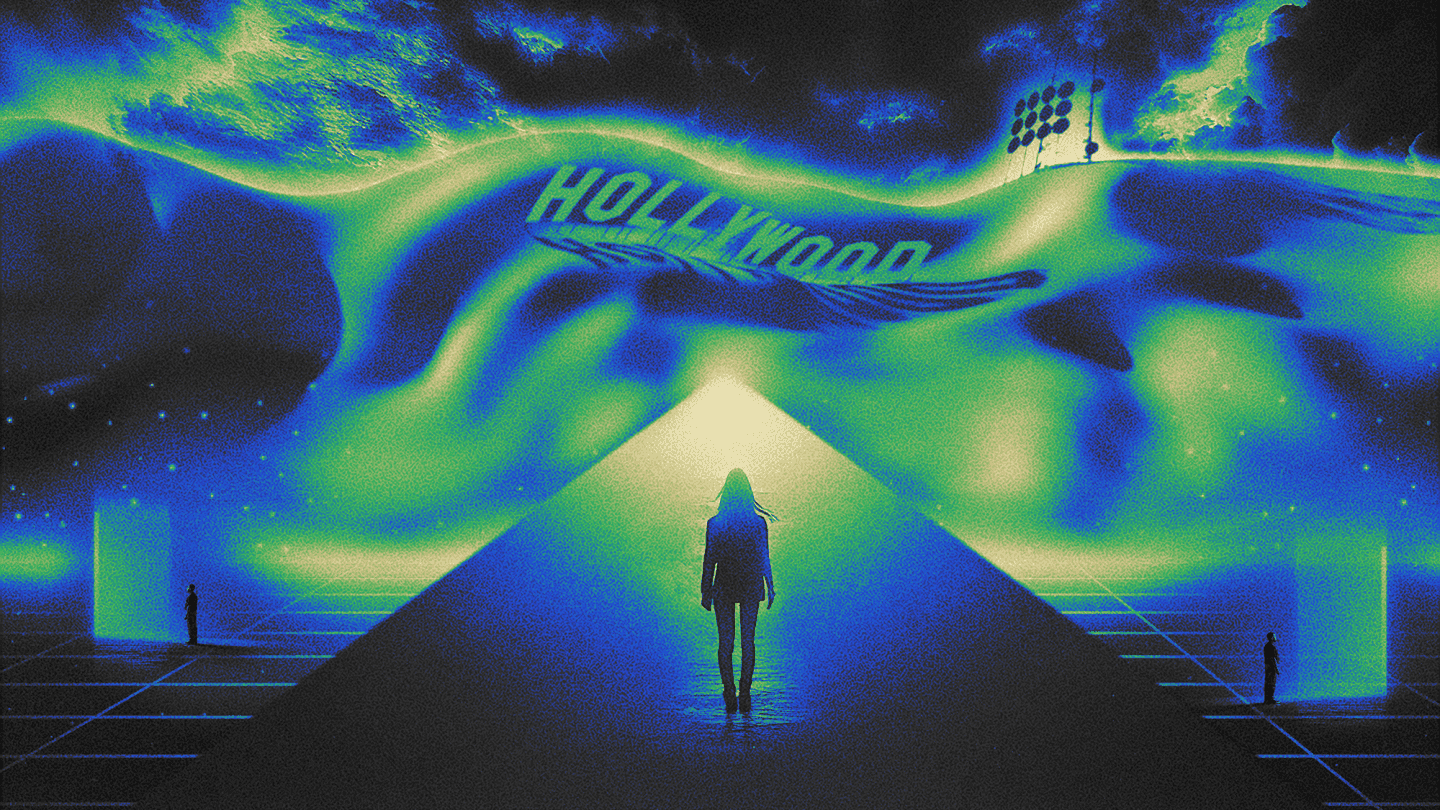
After Sora's Collapse, Hollywood's AI Reckoning Has Never Been More Uncertain
OpenAI's retreat from Hollywood didn't settle anything — it just reminded everyone that in the AI era, nobody really knows what comes next.

Hollywood's AI Identity Crisis Is Far From Over
Anyone claiming to know exactly where artificial intelligence is taking the entertainment industry should probably be the first person you stop listening to. The collapse of OpenAI's Sora ambitions and the quiet death of its Disney partnership didn't resolve the debate — it simply underscored the one thing everyone already suspected: nobody has a clue what happens next.
AI Enters the Storyline — Literally
The new season of The Comeback arrives with more than just the triumphant return of Lisa Kudrow's delightfully insufferable Valerie Cherish. It brings with it something television comedy has rarely dared to dramatize directly: artificial intelligence as a genuine narrative force.
Cherish steps back into an industry transformed. The kind of disposable, algorithm-chasing streaming content that fills endless queues can now, apparently, be generated largely by machine. The show teeters expertly on the edge of satire — are we meant to laugh at the death of mediocre human-produced content, or genuinely fear what creative territory gets swallowed up next? Kudrow and co-executive producer Michael Patrick King resist giving us an easy answer, but they do leave one uncomfortable truth intact: machines are already capable of doing significant creative work.
As the season unfolds, human writers spiral into anxiety. Abbi Jacobson's showrunner character delivers what can only be described as an epic meltdown, declaring she just wants to get herself and her children out of town before everything implodes. Whether that implosion is inevitable or merely an elaborate panic attack, the writers wisely leave open. That ambiguity, it turns out, is the most honest thing anyone in Hollywood can offer right now.
An Industry Wobbling at the Edge
The entertainment business currently resembles someone standing on one foot on a moving train — aware that something is shifting beneath them, uncertain whether they're about to fall or simply find their balance. The debate over AI's role plays out loudly and constantly, from Guillermo del Toro's passionate anti-AI declarations during awards season to Darren Aronofsky's more curious, exploratory approach to the technology. From Pamela Anderson banning AI-generated likenesses to the steady rise of virtual influencers, the conversation is everywhere — on panel stages, in WhatsApp group chats, over lunch.
Hulu's Paradise takes perhaps the most intellectually honest approach of all. In its season finale, creator Dan Fogelman essentially throws his hands up. He constructs an entire episode around the central unanswerable question — will AI save us or destroy us? — and then refuses to answer it. His characters don't know. His writers don't know. And he seems to respect the audience enough not to pretend otherwise.
Even brands have entered the philosophical fray. Volkswagen used its Super Bowl spot to champion analog humanity — rain dancing, ice cream trucks, the warm messiness of lived experience. OpenAI fired back during March Madness with a ChatGPT ad depicting two brothers restoring an old family truck with the AI's guidance. Same product category, opposite worldviews, both airing simultaneously to the same audiences.
The Real-World Impact Still Lags Behind the Fear
For all the billions of venture capital dollars that have flooded into AI development, the technology has not yet staged its feared hostile takeover of writers' rooms, recording studios, or film sets. The revolution, if it is one, is moving slower than its most fervent advocates — and most anxious critics — predicted.
And yet, as comedian and actor Jenny Slate recently articulated with disarming simplicity, the emotional weight of uncertainty is real regardless: "I just want to be an actor. Please let me keep being an actor. Computers, don't take my job."
That visceral plea captures something important. It's not necessarily about what AI is doing right now. It's about what it might do, and the powerlessness of not knowing.
Sora's Retreat Changes Nothing and Everything
When Sam Altman and OpenAI quietly backed away from their Hollywood ambitions last week — shelving Sora and walking away from what had been a closely watched Disney partnership — writers and creative workers allowed themselves a moment of celebration. A tech giant had blinked.
But the victory may be more symbolic than structural. Another company will step into that space. The tools being celebrated as threats are already in daily use by many of the same writers who cheered the retreat — ChatGPT has become a standard part of countless creative workflows, whether its users advertise that fact or not.
Defending an Industry Nobody Was Happy With
Here lies perhaps the deepest irony in this entire conversation. The creative class — led in spirit by del Toro but composed in reality of thousands of working writers, directors, actors, costume designers, drivers, and caterers — has rushed to defend an industry they spent years criticizing.
And rightfully so. Film and television had already been trending in troubling directions long before AI entered the picture: increasingly corporate, formulaic, risk-averse, and financially inaccessible. Productions fled American cities. Financing dried up. Opportunity narrowed. The creative output became safer and blander. Why exactly are we fighting to preserve that?
The answer, for many, is that AI doesn't represent a break from those problems — it represents their logical endpoint. It is, in this reading, not a new threat but the final, most aggressive wave of a decades-long technocapitalist encroachment. That's the ideology powering Justine Bateman's No AI Film Festival and filmmaker Clint Bentley, director of Train Dreams, who put the stakes plainly: "It's weird to be in a time where we are asking ourselves whether people matter."
The Case for AI as Creative Liberator
Not everyone sees a vulture circling. Some see a defibrillator.
The pro-AI argument in entertainment goes something like this: by dramatically lowering production costs and putting filmmaking tools within reach of virtually anyone, artificial intelligence could strip power away from the very corporate gatekeepers who have been strangling creativity for decades. Executives might be more willing to greenlight unconventional projects when the financial stakes are lower. Promise AI CEO George Strompolos puts it bluntly — you won't have to risk your entire career on a single greenlight decision.
The vision is almost utopian in its framing: movies everywhere, made by anyone, freed from the cartel. Lab-grown diamonds flooding the market, making De Beers irrelevant.
The counter-argument arrives immediately and with equal force: if diamonds are everywhere, they're worth nothing. The gatekeepers, for all their failures, also filtered out an ocean of mediocrity. Remove the barriers, and the slop rushes in. If anyone can make a film, does the act of making one mean anything?
A Debate That Feeds on Its Own Uncertainty
The argument continues in circles, and will likely keep doing so. A creative community that has long championed equity and accessibility now finds itself defending a degree of professional exclusivity. A techno-oligarchy that has accumulated extraordinary wealth and power positions itself as a champion of the everyday person. The contradictions are everywhere, and nobody seems particularly embarrassed by them.
What makes it all so maddening — and so fascinating — is that the uncertainty doesn't weaken either side's conviction. It strengthens it. An argument that cannot be definitively resolved is an argument that never has to end.
And so the entertainment industry moves forward in exactly the way it always has in moments of genuine disruption: lurching, arguing, occasionally breaking, occasionally innovating, one dramatic announcement and its equally dramatic reversal at a time.
The central irony of this entire AI moment in Hollywood may be the most fitting conclusion available: a technology built on predicting the next word, trained on the entire archive of human expression, cannot tell us what tomorrow looks like. In that darkness, the only option is to keep moving forward — and keep arguing about which direction that should be.

