74 Retired U.S. Military Leaders Endorse Iran Strikes, Citing Decades of American Blood on Tehran's Hands
Dozens of former senior U.S. commanders publicly backed joint American-Israeli military operations against Iran, warning the regime has long sought to harm Americans.

Retired U.S. Generals and Admirals Throw Weight Behind Iran Military Campaign
Seventy-four retired American generals and admirals have publicly endorsed the ongoing joint U.S.-Israeli military operations against Iran, describing the campaign as a long-overdue response to decades of aggression from the Islamic Republic. Their formal backing appeared in an open letter published Tuesday through the Jewish Institute for National Security of America (JINSA), signed by some of the most distinguished former senior commanders in American military history.
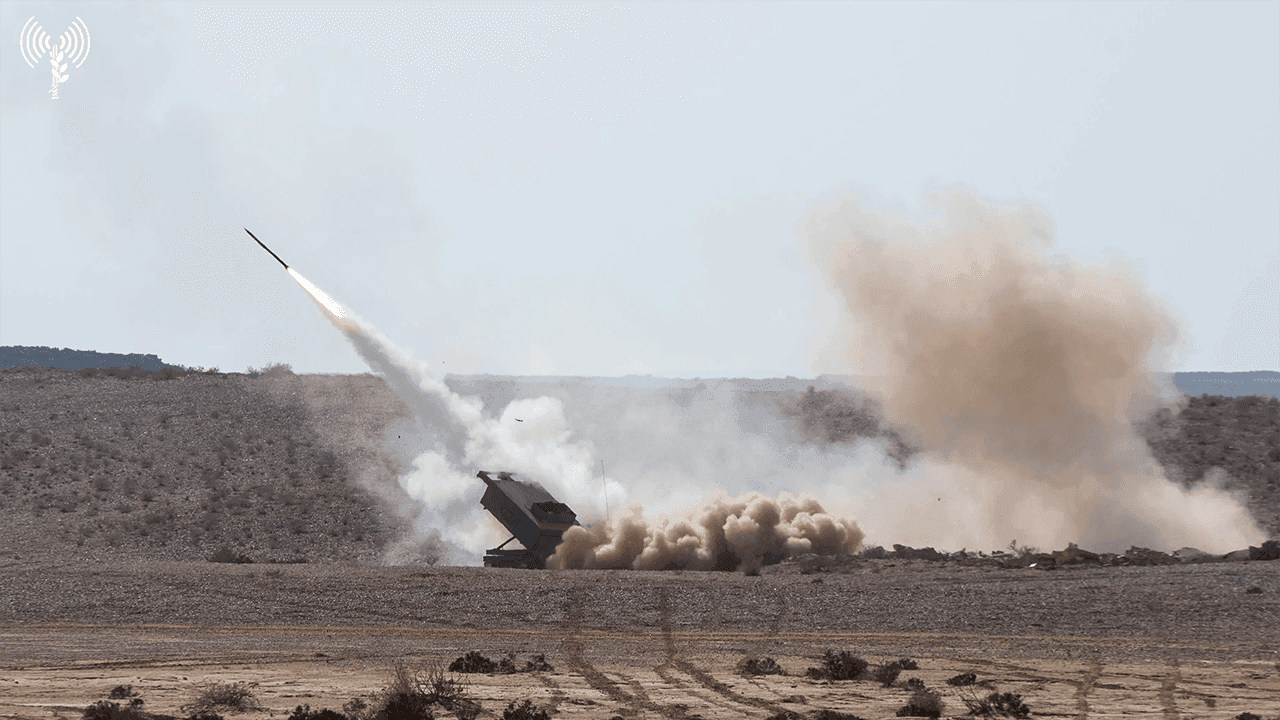
The letter expresses support for Operations Epic Fury and Roaring Lion — the coordinated military campaign designed to erode Iran's capacity to threaten U.S. forces, regional allies, and key partners across the Middle East.
"As retired senior American military leaders, we support the joint U.S.-Israeli military action to degrade and weaken the Iranian regime's ability to threaten the United States, our allies and partners, and the Iranian people," the letter reads. "And we commend the valor of the outstanding United States Military and our Intelligence Community engaged in this operation."
High-Profile Signatories Among the Retired Commander Community
The list of signatories reads as a who's who of American military leadership spanning multiple decades. Notable figures include former Vice Chairman of the Joint Chiefs of Staff Adm. Edmund P. Giambastiani Jr., who served during the peak of the Iraq War; former Vice Chief of Naval Operations Adm. Jerome Johnson; former Assistant Commandant of the Marine Corps Gen. W.L. Nyland; former Supreme Allied Commander Europe Gen. Philip M. Breedlove; and former U.S. Pacific Command chief Adm. Timothy J. Keating.
These commanders collectively bring centuries of combined military experience, lending significant institutional credibility to the letter's message.
A Regime Built on Hostility Toward America
The letter pulls no punches in its characterization of the Iranian government, describing a regime that has defined itself through opposition to the United States and its allies since its founding nearly five decades ago.
"Since its inception 47 years ago, the radical regime, whose slogan is 'Death to America, Death to Israel,' has committed to endangering the lives of U.S. troops, diplomats, and civilians across the Middle East and here at home," the letter states, noting that hundreds of Americans have died at the hands of the Islamic Republic and its network of militant proxy groups.
The retired commanders argue the current military action is a direct and rational response to Iran's persistent efforts to expand its offensive capabilities. "U.S.-Israel military action is a response to Iran's unstinting efforts to make those ambitions a reality," the letter explains, adding that following last summer's 12-Day War, Tehran accelerated its missile production program to threaten American bases, regional partners, and even the U.S. homeland itself.
Iran's Proxy Network and Nuclear Ambitions Remain Central Concerns
Beyond its direct military posture, Iran's influence through regional proxy forces remains a pressing threat, according to the letter. Armed groups operating in Yemen, Iraq, Lebanon, and elsewhere continue to menace American targets, threaten Israel, and disrupt freedom of navigation in some of the world's most strategically vital waterways.
The letter also highlights Iran's renewed nuclear ambitions. Despite Operation Midnight Hammer — which struck Iran's primary enrichment facilities last June — Tehran has reportedly begun attempting to reconstruct elements of its nuclear infrastructure, raising alarms about the regime's long-term intentions.
Additionally, the signatories pointed to Iran's violent suppression of domestic protests as evidence of the regime's authoritarian character. "The regime's brutal crackdown on protesters showed the entire world just what it is willing to do to keep its people and the region under its thumb," they wrote.
U.S.-Israel Cooperation Described as Strategically Essential
The open letter emphasizes that close coordination between the United States, Israel, and regional partners is not merely helpful — it is essential to the campaign's success.
"Such cooperation is vital to degrade and eliminate the regime's arsenals, undermine its organs of oppression, and signal unmistakably that it cannot continue threatening not only core U.S. interests, but the broader security and prosperity of the Middle East and its own population," the letter states.
Secretary of Defense Pete Hegseth reinforced this message on Wednesday, describing the joint campaign as a decisive operation aimed at dismantling Iran's missile systems and air defense networks. He said both air forces were rapidly establishing dominance over Iranian skies.
"Starting last night and to be completed in a few days… the two most powerful air forces in the world will have complete control of Iranian skies. Uncontested airspace," Hegseth said.
Critics Warn of Broader Regional Escalation
Not everyone shares the commanders' confidence in the operation's strategic wisdom. Prominent voices across the political spectrum and international community have raised serious concerns about where the campaign could lead.
French President Emmanuel Macron urged restraint, cautioning that further escalation risks destabilizing the broader region. United Nations Secretary-General António Guterres warned that the conflict could spiral into a far wider confrontation and called for renewed diplomatic engagement.
Several Democratic members of Congress also expressed skepticism. Representative Jim Himes of Connecticut characterized the operation as "a war of choice with no strategic endgame," while Senator Mark Warner of Virginia, after attending a classified intelligence briefing, stated he had seen no compelling evidence of an imminent Iranian threat that would justify the strikes.
JINSA Official: Commanders Witnessed the Threat Firsthand
Blaise Misztal, JINSA's vice president for policy, defended the letter's perspective, arguing that the signatories speak from direct personal experience with the Iranian threat.
"For more than two decades, Iran has been targeting and killing U.S. men and women in uniform," Misztal said. "The retired senior military leaders who signed this letter have seen that threat up close and firsthand. They understand the threat that Iran poses to America, the urgent need to address it, and the tremendous capabilities that the United States and Israel have to do so, together."
Ultimate Future of Iran Rests With Its People
Despite their strong backing for military pressure, the retired commanders concluded their letter with a forward-looking acknowledgment — that lasting change in Iran cannot be imposed from outside.
"It will ultimately be up to the Iranian people to bring down the regime and enable a better future for Iran and the world," the letter states, framing the military campaign not as an end in itself, but as one component of a broader effort to weaken a government that has long threatened both its own citizens and the international community.