5 Lunar Secrets NASA's Artemis Program Could Finally Unlock
NASA's Artemis missions are heading back to the Moon — and this time, scientists hope to crack some of its deepest, longest-standing mysteries.
NASA Is Going Back to the Moon — and Science Will Never Be the Same
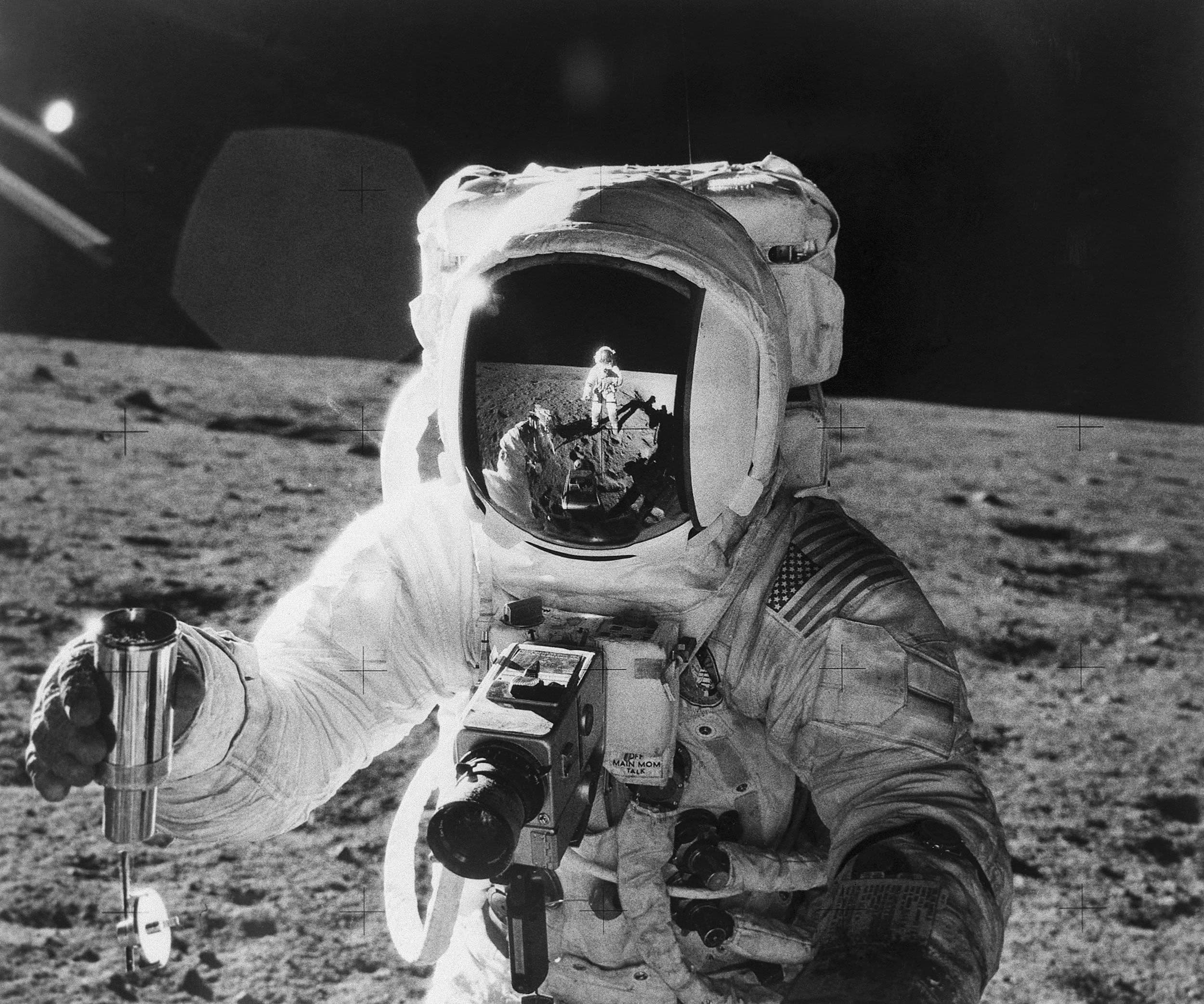
For the first time since the Apollo era, human boots are set to touch the lunar surface. NASA's Artemis program is charting a bold course back to Earth's only natural satellite — not just for a brief visit, but to establish a lasting presence that could transform our understanding of the Moon, the solar system, and planetary formation itself.
While Artemis II and III are designed as orbital missions, Artemis IV is slated to return astronauts to the surface. The long-term vision goes far beyond planting flags — it involves sustained operations that will generate a continuous flow of rock samples, environmental data, and scientific observations.
Some of the Moon's most enduring mysteries may finally be within reach. The answers won't come overnight, but over the next 10 to 20 years, researchers believe we could see major breakthroughs. Here are five profound questions that the Artemis program could help answer.
1. Where Did the Moon Actually Come From?
The most widely accepted explanation for the Moon's origin is the Giant Impact Hypothesis. According to this theory, a Mars-sized body collided with a young, forming Earth approximately 4.5 billion years ago. The resulting debris eventually coalesced and solidified into the Moon we see today.
However, this theory is built largely on computer modeling and a relatively small collection of samples retrieved during the Apollo missions more than half a century ago. Those samples, while groundbreaking for their time, represent a narrow slice of the Moon's geological history.
Artemis missions could change that by delivering fresh, pristine rock samples using modern analytical tools far more sophisticated than anything available in the 1960s and 70s. Scientists are particularly eager to access deep mantle material exposed by ancient craters and to reconstruct the timeline of the early lunar magma ocean — a global sea of molten rock that once covered the entire Moon. This data could either confirm the Giant Impact model or force a significant rethink.
2. How Much Water Does the Moon Hold — and Can We Use It?
Decades ago, the Moon was considered bone dry. That assumption has since been overturned. Scientists have confirmed the presence of water ice locked inside permanently shadowed craters near the lunar south pole, as well as water molecules trapped within surface minerals.
But knowing water exists and understanding it well enough to use it are two very different things. The critical questions now are about quantity, form, and accessibility.
Artemis crews will directly explore these shadowed polar craters for the first time. Researchers need to know whether ice is loosely mixed into the lunar soil, compressed into solid slabs, or concentrated in purer underground deposits. In the most optimistic scenario, extractable water could be processed into breathable oxygen or rocket propellant, becoming a vital resource for future deep-space missions. In a less favorable outcome, the ice may be so thinly dispersed that large-scale extraction would be technically and economically impractical.
3. What Lies Beneath the Lunar Surface?
The Moon's interior remains surprisingly poorly understood. Apollo-era seismometers did detect both shallow and deep moonquakes, offering early clues about the subsurface. But that data was limited in scope, collected from a single region, and gathered with instruments that pale in comparison to modern technology.
Existing gravitational and thermal models provide a rough outline of the Moon's internal layers, but nothing approaching a detailed, high-resolution map.
A sustained Artemis presence would allow scientists to deploy seismic networks across multiple locations — including regions never previously studied. A global array of modern seismometers would dramatically sharpen our picture of the lunar interior, helping define the size and composition of the core, the characteristics of the mantle, and how residual heat is distributed throughout the Moon. It won't deliver a perfect image, but it would be the most complete portrait of the lunar interior ever assembled.
4. Why Is the Far Side of the Moon So Dramatically Different?
The Moon presents a striking paradox. Its near side — the face perpetually turned toward Earth — is relatively smooth, dotted with vast plains of ancient volcanic rock known as maria. Its far side, by contrast, is heavily cratered, rugged, and geologically distinct.
This stark asymmetry remains one of lunar science's most compelling unsolved puzzles. Several competing theories attempt to explain it: differences in early heat distribution, variations in how the primordial magma ocean crystallized, or tidal gravitational influences from Earth. So far, none of these explanations fully accounts for what we observe.
The Artemis program opens the possibility of the first crewed expeditions to the lunar far side. Samples collected there could be dated and analyzed for their chemical composition and thermal history — precisely the kind of evidence needed to test existing hypotheses and potentially rewrite the story of the Moon's earliest geological evolution.
5. Did the Moon Once Have a Powerful Magnetic Field?
One of the most unexpected discoveries of the Apollo program was that many lunar rocks are magnetized — a sign that the Moon once possessed a robust internal magnetic dynamo, similar in concept to the one that generates Earth's magnetic field today.
The problem is that based on everything we know about the Moon's size and internal temperature, it seems far too small and too cold to have sustained such a field for any significant length of time. Yet the magnetic signatures preserved in those ancient rocks tell a different story.
The renewed era of lunar exploration may finally resolve this contradiction. Fresh samples collected from geologically diverse regions, combined with precise magnetic field measurements across the surface, will allow scientists to reconstruct when the lunar dynamo was active, how powerful it was, and why it eventually died. The answers could have broad implications for how we understand the evolution of magnetic fields on rocky planets throughout the solar system.
The Moon as a Gateway, Not a Destination
What makes the Artemis program fundamentally different from Apollo is its underlying philosophy. The Moon is no longer the finish line — it's the starting point for a new era of human and scientific exploration.
The discoveries made over the coming decades will do more than satisfy lunar curiosity. They will reshape our understanding of how rocky worlds form, how planetary interiors evolve, and how life-sustaining resources might be found and used beyond Earth.
Humanity may not walk away with every answer. But for the first time in more than fifty years, we will be asking the right questions, in the right place, with the tools — and the ambition — to finally get them answered.