250 Years Later, Students Bring an 18th-Century Mechanical Volcano Back to Life
Two engineering students at the University of Melbourne have recreated a 1775 mechanical volcano concept, finally bringing Sir William Hamilton's vision to life.
A 250-Year-Old Vision Finally Erupts Into Reality
A remarkable piece of engineering history has been resurrected after two and a half centuries of dormancy. Two graduate engineering students at the University of Melbourne have successfully reconstructed a mechanical volcano device originally conceived in 1775 by Sir William Hamilton — a British diplomat with a deep passion for volcanology. Using a combination of modern fabrication techniques and electronic systems, the students brought Hamilton's long-dormant concept roaring back to life, simulating the fiery spectacle of Italy's iconic Mount Vesuvius.
The Man Behind the Original Concept
Sir William Hamilton served as British Ambassador to Naples and Sicily between 1765 and 1800, a role that placed him in close proximity to one of Europe's most active and awe-inspiring volcanoes. Far more than a passive observer, Hamilton was captivated by the raw geological power of Vesuvius and sought to capture its dramatic visual impact through mechanical artistry.
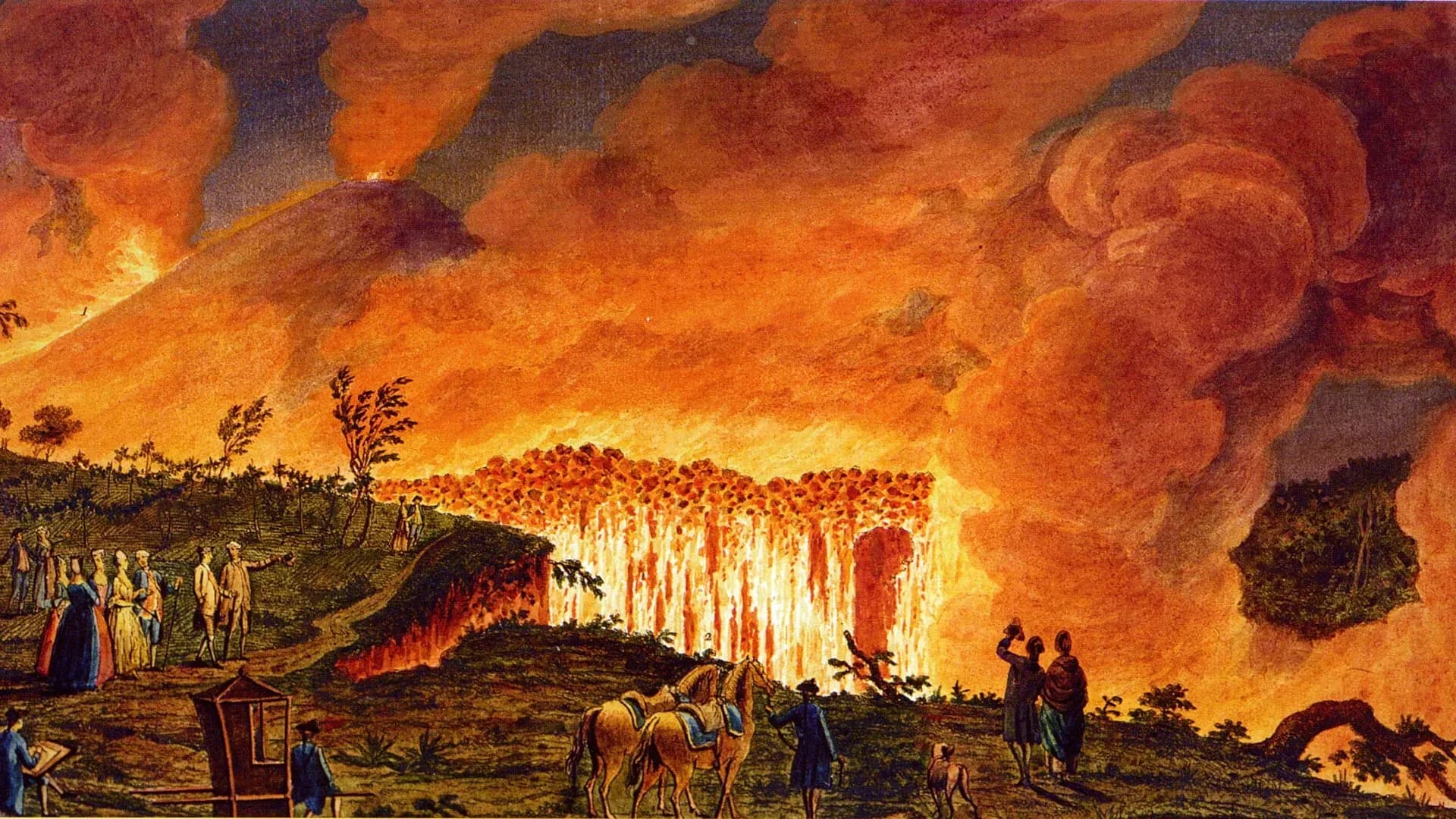
His design drew inspiration from Night View of a Current of Lava, an evocative 1771 watercolor by British-Italian artist Pietro Fabris. Hamilton envisioned a clockwork-driven device that would replicate the glowing movement of molten lava and the explosive energy of a volcanic eruption. Whether Hamilton ever built a working version of the machine remains unknown, but a detailed sketch preserved in the Bordeaux Municipal Library provided the critical blueprint that made its modern recreation possible.
Modern Engineering Meets Historic Design
The project was initiated by Dr. Richard Gillespie, Senior Curator in the Faculty of Engineering and Information Technology at the University of Melbourne, who recognized both the historical significance and the educational potential of the endeavor.
"It is fitting that after 250 years exactly, our students have brought this dormant project to life," Dr. Gillespie remarked. "It is a wonderful piece of science communication. People around the world have always been fascinated by the immense power of volcanoes."
Building the Device From Scratch
Master of Mechatronics student Xinyu (Jasmine) Xu and Master of Mechanical Engineering student Yuji (Andy) Zeng took on the challenge, spending three months constructing the device inside The Creator Space, the university's dedicated student workshop. While Hamilton's original concept relied on clockwork mechanics, the students adapted the design using contemporary materials and technologies — including laser-cut timber and acrylic panels, programmable LED lighting arrays, and sophisticated electronic control systems — to faithfully recreate the visual drama Hamilton had imagined.
For Ms. Xu, the project was as much a personal learning journey as it was a historical reconstruction. "The project offered a wealth of learning opportunities. I've extended many skills, including programming, soldering, and physics applications," she said.
Mr. Zeng echoed that sentiment, noting that the hands-on nature of the work provided real-world engineering experience that classroom study alone cannot replicate. "It was a fantastic way to build my hands-on problem-solving skills," he said. "We still faced some of the challenges that Hamilton faced. The light had to be designed and balanced so the mechanisms were hidden from view."
Bridging the Gap Between History and Innovation
Supervising research engineer Andrew Kogios praised both students for the breadth of skills they developed throughout the process, which ranged from material selection and 3D printing to electronics troubleshooting and collaborative problem-solving.
"From selecting materials and 3D printing, to troubleshooting electronics and satisfying requirements, working collaboratively with Yuji and Xinyu has been extremely rewarding," Mr. Kogios said. "Experiences like these, supplementing their university studies, position them well for their future endeavors."
Where to See the Mechanical Volcano
The completed device now serves as the centerpiece of The Grand Tour, an exhibition currently running at the University of Melbourne's Baillieu Library. Visitors can experience Hamilton's resurrected vision in person until June 28, 2026 — a fitting tribute to a centuries-old imagination that refused to stay dormant.